Understanding Artificial Intelligence and where we stand
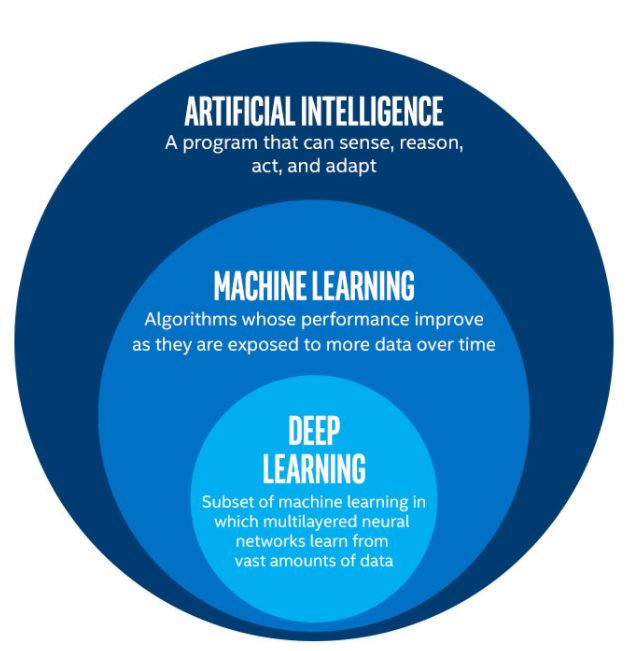
Artificial Intelligence (AI) is the simulation of human intelligence in machines, enabling them to think, learn, and make decisions.
AI is broadly categorized into three types:
- Narrow AI: AI designed for specific tasks (e.g., Chatbots, Google Assistant, self-driving car vision systems).
- General AI: AI that can perform any intellectual task a human can. This remains a future goal and will take decades to reach.
- Super AI: AI that surpasses human intelligence, which is still theoretical.
Currently, we are far from achieving General AI. However, the biggest breakthrough today is Generative AI, a type of Machine Learning (ML) model that creates new content, such as text, images, code, and even music.
Key AI Technologies
AI has evolved through multiple technological advancements. Some of the core AI technologies include:
Machine Learning (ML)
Machine learning enables computers to learn patterns from data. It has three main types:
- Supervised Learning: The model learns from labeled data (e.g., Large Language Models like ChatGPT predicting the next word in a sentence).
- Unsupervised Learning: The model finds hidden patterns in data without labels (e.g., customer segmentation in marketing).
- Reinforcement Learning: The model learns by trial and error, receiving rewards for good decisions (e.g., AI in game playing).
Traditional AI vs. Neural Networks
Traditional AI improved with data, but not as significantly as small neural networks. As AI models grew into medium and large neural networks, they became better at recognizing complex patterns and making accurate predictions.
Deep Learning
Deep learning, a subset of machine learning, uses large-scale neural networks to process vast amounts of data. This technology powers modern AI applications like speech recognition, image processing, and most importantly, Generative AI.
What is Generative AI?
Generative AI refers to AI models that generate new content based on training data. Large Language Models (LLMs) are a prime example, capable of generating human-like text, answering questions, and even writing code.
How LLMs Work
LLMs, like GPT and BERT, use a Transformer architecture, which processes vast amounts of text data to predict and generate words based on context. These models improve through:
- Pre-training: Learning language patterns from a large dataset.
- Fine-tuning: Adapting to specific tasks (e.g., legal AI, medical AI, code generation).
Use Cases of Generative AI
- Content Creation: Writing articles, blogs, and scripts.
- Code Generation: AI-powered programming assistance.
- Chatbots & Virtual Assistants: Enhanced conversational AI.
- Design & Creativity: Multi Modal AI-generated art, music, and videos.
Despite its capabilities, Generative AI lacks true understanding and reasoning, making responsible and explainable AI more critical than ever.
The Need for Responsible & Explainable AI
With AI’s rapid advancements, concerns about ethics, bias, and accountability have grown. This is where Responsible AI and Explainable AI (XAI) come into play.
Responsible AI
Responsible AI ensures AI systems are ethical, fair, and transparent. It focuses on:
- Bias Reduction: AI models should be trained on diverse datasets to avoid discrimination.
- Privacy & Security: Protecting user data from misuse.
- Fairness & Accountability: Ensuring AI decisions are justifiable and unbiased.
Explainable AI (XAI)
Explainable AI makes AI decisions understandable to humans. This is crucial in:
- Healthcare: AI-driven diagnoses need to be interpretable by doctors.
- Finance: Loan approval AI must explain why an application was rejected.
- Legal & Compliance: AI in legal decisions must provide reasoning.
Without explainability, AI remains a “black box,” raising ethical concerns and limiting trust.
The Road Ahead
AI is evolving rapidly, but we are far from General AI. The immediate focus should be on making AI more responsible, explainable, and aligned with human values. Generative AI is powerful, but its ethical deployment is just as crucial as its innovation.
The journey towards General AI will require many iterations, and for now, ensuring AI remains fair, unbiased, and interpretable is the priority.
Final Thoughts
AI is transforming industries and daily life, but as it grows more powerful, ensuring it remains responsible and transparent is key. The future of AI lies not just in its capabilities, but also in its ethics and trustworthiness.
Would you trust an AI that you don’t understand? That’s the real challenge we need to solve!